Optics first. Software second.
AFXUS makes smart glasses for people who have to wear them for eight hours, not eight minutes. That constraint decides everything else.
DESIGN — KWUN TONG, HK
ASSEMBLY — BAO'AN, SHENZHEN
HEADCOUNT — 74
SHIPPING — 41 COUNTRIES
We started with a rejected prototype
In 2019 our first frame weighed 96 grams. It worked — for about twenty minutes. Everyone who tried it took it off and rubbed their temples.
So we stopped adding features and started subtracting grams. The display engine moved out of the temple and into a folded optical path behind the lens. The battery became a swappable pack. The camera kept one sensor instead of three.
What survived that process is the product line you see today: 42 to 56 grams, twelve hours of typical use, and a repair path that does not require throwing the unit away.
Weight is a feature
Every gram above 60 was rejected twice. We measure with lenses, battery and temples installed — the number a customer actually feels.
Latency beats intelligence
A brilliant assistant that answers in 1.4 seconds is unusable with your hands full. We moved the first 200ms onto the frame.
Repair over replace
Temples, batteries and hinges are field-replaceable for five years after purchase. Calibration records follow the serial number.
Nine stations, eleven minutes, one human eye test
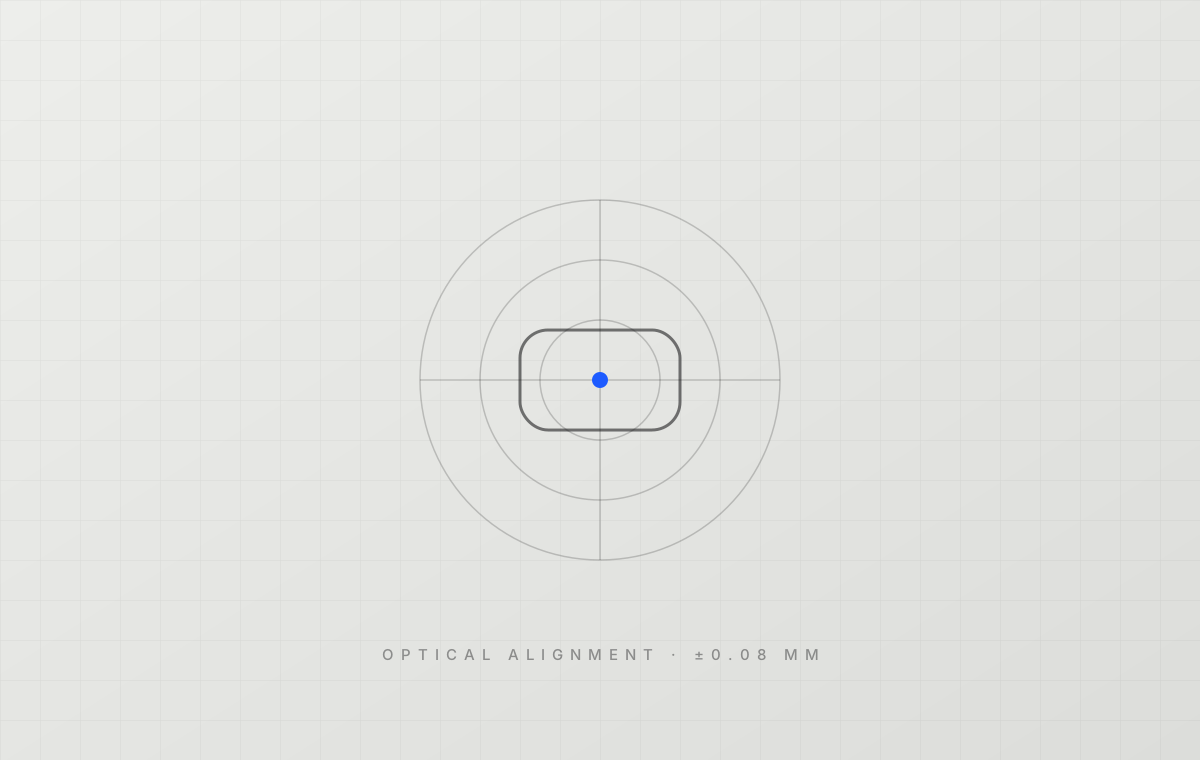
Smart glasses have more in common with a camera than with eyewear. Sensor, waveguide and pupil alignment are measured in tenths of a millimetre — and verified by a person before the box is sealed.
- — No always-on recording. The LED is wired in series with the sensor.
- — No selling of behavioural data. On-device inference never leaves the frame unless you ask.
- — No subscription required for hardware features you already paid for.
- — No planned obsolescence: firmware support is 5 years minimum.